
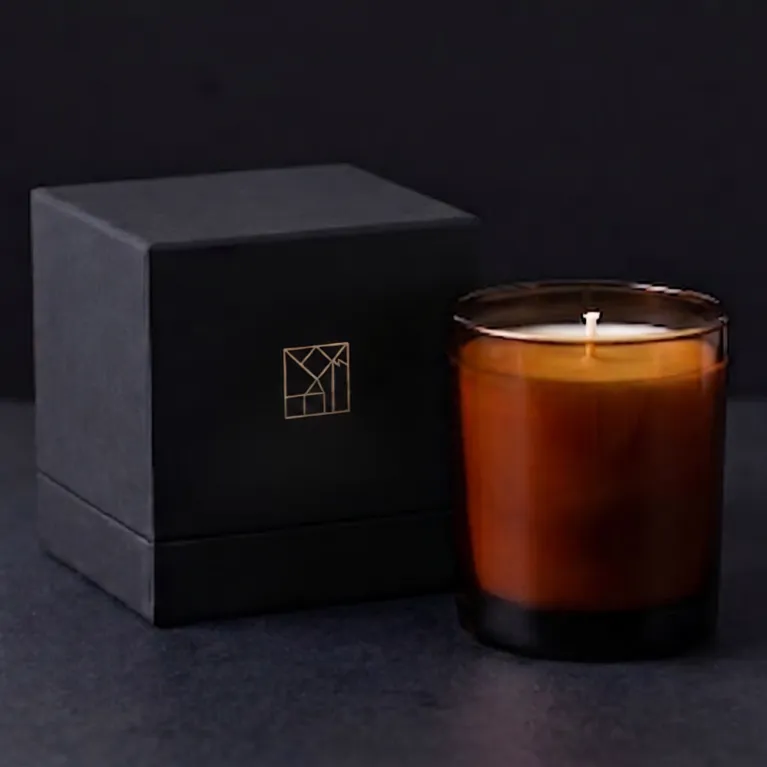
Candle Packaging Ideas: 15+ Ways to Box, Brand, and Protect Your Candles (2026 Guide)
Whatever stage your candle brand is at, the right candle packaging ideas solve a different problem: a hobbyist making their first Etsy batch needs affordable, presentable boxes; a growing brand shipping wholesale needs packaging that survives transit without a single cracked jar; a retail or gift-focused seller needs a box that reads as premium the second it's picked up off a shelf. This guide covers structural styles, protective inserts, finishes, seasonal packaging, sizing, and the labeling rules that actually apply to candle boxes — with custom candle boxes options for every stage in between.
Box Styles: Choosing the Right Structure
The right structure depends mainly on volume and presentation goals: rigid two-piece boxes suit gifting and premium retail, tuck-end cartons suit volume production runs, and kraft or window boxes suit a natural, shelf-ready look.
1. Rigid Two-Piece Boxes
A separate base and lid gives candles a premium, boutique unboxing moment — the standard choice for gift sets and higher-price-point retail lines.
2. Tuck-End Cartons
Flat-shipped and fast to assemble, tuck-end cartons are the practical choice for higher-volume production where speed and cost matter more than a ceremonial reveal.
3. Kraft Candle Boxes
Uncoated kraft stock reads as natural and handmade, which fits brands leaning into a small-batch or farmers-market aesthetic.
4. Window Boxes
A die-cut window lets the candle sell itself on the shelf without the customer opening the box — useful anywhere retail visibility matters.
5. Gift-Set Boxes
Die-cut compartments for two to four candles turn a single order into a bundled gift, which works well for holiday and wedding-season demand.
6. Sleeve-and-Tray Boxes
A two-stage reveal — sliding an outer sleeve off an inner tray — adds a second print surface and a more deliberate unboxing pace than a single-piece box.
Protection: Getting Glass Jars There in One Piece
Glass jar candles are only as good as the packaging keeping them intact in transit, and the two components that matter most are the insert and the outer structure.
7. Die-Cut Inserts
A snug, candle-shaped die-cut insert is the single highest-impact upgrade for any jar candle shipped direct to a customer, since it stops the jar from shifting or striking the box wall in transit.
8. Shipping-Ready Corrugated Structures
Sizing the outer shipping box to the product's actual dimensions — rather than over-boxing with loose fill — reduces both damage risk and dimensional-weight shipping cost.
Branding and Finishes: Making the Box Feel Like the Scent
Finish choice is where a candle box stops being generic packaging and starts communicating the scent and brand positioning before the lid is even off.
9. Soft-Touch Lamination
A velvety matte laminate reads as premium under a customer's hands, which is why it's common on higher-price-point rigid boxes.
10. Foil Stamping
Gold, copper, or rose-gold foil on a logo or border is a shelf-visible luxury cue that photographs well for social and retail displays alike.
11. Embossing and Debossing
A raised or recessed logo adds a tactile detail that a flat-printed box can't replicate, reinforcing brand quality by touch as well as sight.
12. Belly Bands, Hang Tags, and Wax Seals
These low-cost add-ons let one base box carry different scent names, batch numbers, or seasonal messaging without a full reprint — useful for brands running frequent scent rotations.
13. Candle and Matchbox Pairings
Bundling a small branded matchbox alongside the candle is a low-cost way to add a "ritual" feel to the unboxing and gives customers a natural reason to photograph the set for social media.
Packaging by Candle Type: Pillar, Votive, and Jar Candles
The candle format itself changes what the box needs to do: pillar candles need rigid vertical support, votives need multi-unit compartments, and jar candles need insert-based cushioning above all else.
Pillar Candles
Freestanding pillar candles are more prone to surface scuffing than breakage, so a snug-fitting rigid or corrugated box that limits internal movement matters more than heavy cushioning.
Votive Candles
Sold individually or in small multiples, votives usually need a compartmentalized insert so units don't rub against each other and scuff the finish in transit.
Jar Candles
Glass jar candles are the highest breakage risk of the three, which is why the die-cut insert discussed above is non-negotiable for any jar candle shipped beyond local delivery.
Seasonal and Occasion Packaging
Packaging built around a specific occasion — rather than a generic year-round design — is one of the more effective ways to capture holiday and gifting demand without redesigning your core product line.
Holiday Gifting
A seasonal gift-set box (see item 5) with holiday-specific finishes — a foil snowflake, a red or green belly band — turns an everyday SKU into a limited seasonal offering.
Weddings and Events
Small votive or mini-jar candles packaged as wedding or event favors typically use a simplified box with space for a name, date, or monogram rather than full branding.
Everyday Retail
Outside of seasonal runs, retail-shelf packaging benefits most from the window-box or foil-finish approaches above, which need to perform under store lighting rather than in a gift context.
Candle Box Sizing: How to Get the Fit Right
A candle box should leave just enough clearance for a protective insert — typically a small buffer around the jar or pillar, not a loose fit — since too much empty space is what allows shifting and breakage during shipping.
- Mini/travel candles (roughly 2-4 oz): compact boxes suited to gift sets or sample-size retail offers.
- Standard jar candles (roughly 8-10 oz): the most common single-unit box size, sized to the jar's diameter and height plus insert clearance.
- Large or multi-wick jars (12 oz and up): need a taller or wider structure, and are the format most likely to need a reinforced corrugated outer for shipping.
Because insert and box tolerances vary by jar shape, the most reliable way to confirm sizing is to submit your candle's exact dimensions with your quote request rather than working from generic size ranges alone.
Labeling and Compliance: What Candle Packaging Actually Has to Say
Candle packaging in the US has to satisfy one legal requirement and one industry safety standard, and they cover different things.
The legal requirement is the FTC's Fair Packaging and Labeling Act (16 CFR Part 500): a candle box sold at retail must state the product's identity, the manufacturer's or distributor's name and place of business, and a net quantity statement in both metric and U.S. customary units, placed in the bottom 30% of the front panel at a minimum type size. Overstated language like "jumbo" or "giant" attached to the quantity is specifically prohibited.
The safety piece is ASTM F2058, "Standard Specification for Candle Fire Safety Labeling" — a voluntary industry standard (not a federal regulation) that most manufacturers and retailers follow anyway, covering the fire-safety warning wording (burn within sight, keep away from flammable materials, keep away from children and pets) that has to stay visible and uncovered on the packaging. The Consumer Product Safety Commission (CPSC) doesn't issue its own candle-labeling rule, but treats compliance with F2058 as the practical benchmark and can act under the Federal Hazardous Substances Act if a warning is missing or inadequate. As a real-world reminder of why label accuracy matters, a nationwide candle recall was issued in late 2025 after a packaging warning label was misprinted — a case where the packaging itself, not the candle's wax or wick, was the point of failure.
What Determines Turnaround and Order Size
Turnaround and order size are the two questions every candle brand asks before committing to custom packaging, and the honest answer is that both scale with how much customization you need.
Nexon Packaging produces candle boxes out of our St. Petersburg, FL facility on a standard 20-24 business day turnaround, with a rush option available in 14-18 business days for time-sensitive launches or seasonal runs. Order minimums are kept low specifically so early-stage candle brands can order a first custom run without committing to bulk-warehouse quantities. If you're ready to move past stock packaging, request a free quote with your candle's dimensions and target quantity.
2026 Trends: Where Candle Packaging Is Heading
Sensory Unboxing
Textured paper stock, a layered box-within-a-box reveal, and an embedded scent card are increasingly used to make the box itself part of the fragrance experience, not just a container for it.
Recyclable and Regulation-Ready Materials
Mono-material construction (avoiding mixed plastic-and-paper laminates that are hard to recycle) is becoming the more defensible sustainability claim, as extended producer responsibility (EPR) packaging laws expand state by state and vague "eco-friendly" labeling faces more scrutiny.
Choosing the Right Packaging for Your Brand
Use these four questions to narrow down which of the ideas above fits your brand right now:
- What stage is your brand at? Early-stage and testing a launch → kraft or tuck-end cartons with a low minimum order. Scaling wholesale → tuck-end or corrugated shipping structures built for volume. Premium retail or gifting → rigid two-piece with foil or soft-touch finish.
- Is this candle shipped direct-to-consumer or sold on a shelf? Direct-to-consumer needs a die-cut insert and a shipping-ready outer box above all else. Shelf sales benefit more from a window box or a foil finish visible from a distance.
- Is this a year-round SKU or a seasonal run? Seasonal and gift-occasion runs justify a dedicated seasonal finish (belly band, seasonal foil) rather than redesigning the base box.
- What's your timeline? If you need boxes fast, ask about rush turnaround when you request your quote rather than assuming standard timing.
Frequently Asked Questions
What's the minimum order quantity for custom candle boxes?
Nexon Packaging keeps minimum order quantities low so early-stage candle brands can order a first custom run without committing to bulk quantities — request a quote with your target volume for an exact minimum.
How do I package candles so they don't break or shift during shipping?
Use a die-cut insert sized to the candle's exact dimensions to stop movement inside the box, and size the outer shipping box to the product rather than over-boxing with loose fill.
Does candle packaging legally need a warning label?
Yes — a fire-safety warning label following the ASTM F2058 standard is expected industry-wide, and the box must also carry the legally required net quantity statement and manufacturer information under the FTC's Fair Packaging and Labeling Act.
What size box do I need for my candle?
It depends on the jar or pillar's exact dimensions and how much insert clearance is needed — mini candles (2-4 oz) need the smallest boxes, standard jars (8-10 oz) are the most common size, and large or multi-wick jars need a taller, more reinforced structure.
What's the most eco-friendly candle packaging option?
Mono-material construction — avoiding mixed paper-and-plastic laminates — is currently the more defensible sustainability choice, since single-material boxes are easier to recycle and hold up better against increasing packaging-law scrutiny than a generic "eco-friendly" label alone.
How long does custom candle packaging take to produce?
Nexon Packaging's standard turnaround is 20-24 business days, with a rush option in 14-18 business days for time-sensitive orders.
Ready to move from packaging ideas to an actual box in hand? Request your free custom candle packaging quote and tell us your candle's dimensions, order volume, and timeline.