
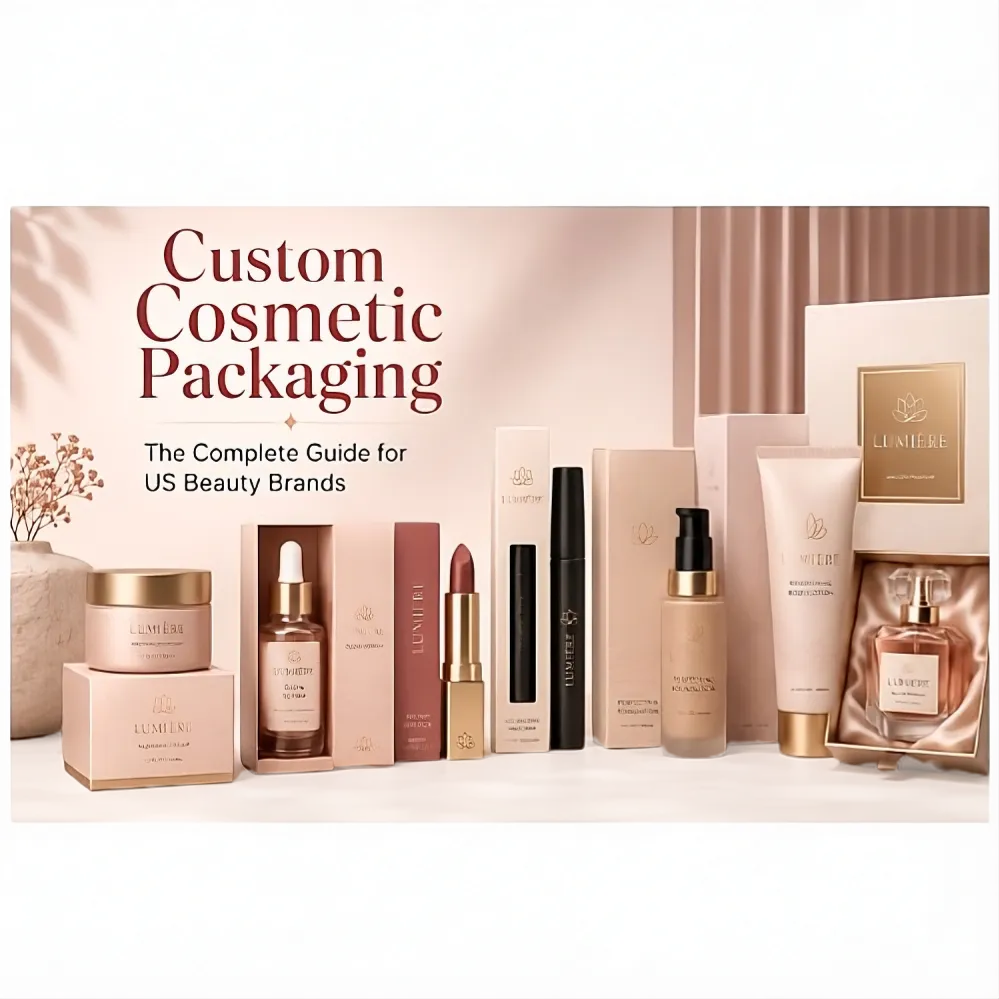
Cosmetic Packaging Materials & FDA Labeling: A Beauty Brand's Guide
Custom cosmetic packaging is one of the few product decisions that affects branding, shelf appeal, and legal compliance all at once. For beauty brands selling in the United States, getting it right means working with a partner who understands custom cosmetic packaging solutions from material selection through FDA labeling — not just box printing. This guide covers what custom cosmetic packaging involves, what drives its cost, what US regulations require, how to order it, and how to choose the right approach for each product type.
What Is Custom Cosmetic Packaging?
Custom cosmetic packaging refers to boxes, cartons, and secondary packaging built to a brand's exact specifications rather than pulled from a generic stock size. This includes structural design (box style, dimensions, inserts), material choice (kraft, rigid board, coated stock), and print finishing (foil stamping, embossing, spot UV, matte or gloss lamination, window cutouts). Unlike generic cosmetic packaging boxes bought off the shelf, custom cosmetic boxes are designed around the specific product inside — a serum bottle, a mascara wand, a pressed-powder compact — so the fit, protection, and printed graphics all work together.
Custom Cosmetic Boxes by Product Type
Different beauty products need different packaging engineering. A box that works for a lipstick won't protect a lotion bottle, and a serum box has different requirements than a foundation bottle. Here's how that plays out across common categories:
Makeup Boxes
Makeup packaging boxes typically need structural inserts to hold compacts, palettes, or applicators securely in transit and on shelf, since these products often have multiple loose components (mirrors, brushes, pans) that shift if the box isn't engineered for them. A snug-fit die-cut insert is the difference between a compact arriving intact and arriving with a cracked mirror.
Skincare Boxes
Skincare packaging boxes are sized for jars, tubes, and bottles, and are often finished in matte lamination to suit a clinical or minimalist brand look that's become standard in the category. Light-blocking stock is worth considering for any formula sensitive to UV exposure, which covers most active-ingredient skincare.
Lip Gloss & Lipstick Boxes
Lip gloss boxes are usually compact, with window cutouts so the shade is visible without opening the packaging. Lipstick boxes run slimmer and taller, with closures designed to keep the bullet from shifting or the cap from popping open in transit — a real risk with taller, top-heavy packaging in a shipping box full of other items.
Mascara Boxes
Mascara boxes are narrow and elongated, built around the length of the wand and tube rather than a generic rectangular shape — a stock box here usually wastes material and looks disproportionate on shelf, and doesn't hold the tube securely enough to prevent rattling.
Foundation Boxes
Foundation boxes need reinforced bases, since foundation bottles (often glass) are heavier than most other cosmetic packaging and are more prone to damage from a flimsy box floor — a die-cut base insert distributes that weight instead of relying on the box walls alone.
Serum Boxes
Serum boxes benefit from light-blocking stock, since many active ingredients in serums degrade under UV exposure. A snug-fit insert also keeps dropper bottles from rattling inside the box, which matters more here than for a wider-based bottle.
Lotion Boxes
Lotion boxes need leak-resistant seams and a board weight sturdy enough to support pump or squeeze bottles, which see more repeated handling than most other cosmetic products — the box has to survive being picked up and set down daily, not just shipped once.
Perfume Boxes
Perfume boxes are typically the most premium in construction — rigid, luxury cosmetic packaging with foam or paperboard inserts to protect glass bottles that are both fragile and expensive to replace if damaged in shipping. See our custom rigid boxes for the magnetic-closure and foil-finish options that carry over directly to premium perfume packaging.
Materials and Sustainability
Material choice affects cost, durability, and brand perception. Kraft board is the most common choice for cosmetic product packaging that wants to signal a natural or sustainable positioning, and it's widely recyclable through standard paper recycling streams. Rigid board is heavier and more structurally sound, used mainly for luxury cosmetic packaging like perfume and premium skincare lines where the box itself is part of the unboxing experience. Coated stock sits in between, offering a smoother print surface for detailed graphics while remaining recyclable in most municipal programs. If sustainability messaging matters to your customers, confirm with your supplier whether the specific stock and any lamination used are recyclable as manufactured — some glossy laminates and foil finishes can affect recyclability, and it's worth knowing before you print it on the box.
Materials at a Glance
| Material | Best for | Trade-off |
|---|---|---|
| Kraft | Natural/sustainable positioning, everyday skincare | Less premium look than rigid or coated stock |
| Coated stock | Full-color makeup packaging, crisp graphics | Mid-range cost, mid-range structural weight |
| Rigid board | Perfume, premium skincare, luxury gift sets | Highest cost, bulkiest to ship/store flat |
How to Order Custom Cosmetic Packaging
- Share your product specs. Bottle or container dimensions, quantity needed, and any existing brand guidelines.
- Choose material and finish. Kraft, rigid, or coated stock, plus any finishing like foil stamping or spot UV.
- Review a design proof. A free proof should show your artwork on the actual box structure before anything is printed.
- Approve a physical sample (recommended for first orders, especially larger production runs).
- Confirm production and delivery timeline, typically 20-24 business days, with a 14-18 day rush option.
What Drives Custom Cosmetic Packaging Cost
Pricing for custom cosmetic packaging boxes depends mainly on order volume, material, and finishing — per-unit cost drops as volume increases, since fixed setup costs spread across more boxes. Add-ons like foil stamping, embossing, or specialty coated stock add cost per unit but are often what separates luxury cosmetic packaging from a basic printed box. Most US suppliers, including Nexon Packaging, offer low minimum order quantities so smaller and newer beauty brands aren't priced out of custom packaging entirely — for an exact number, request a quote against your specific material, finish, and volume rather than relying on a generic per-unit estimate.
FDA Labeling Requirements for Cosmetic Packaging
Cosmetic packaging sold in the US isn't just a design exercise — it has to meet FDA labeling rules under 21 CFR Part 701. The principal display panel must clearly state the product name and net quantity of contents, and the label must list ingredients in descending order of predominance. The FDA has also been implementing the Modernization of Cosmetics Regulation Act (MoCRA), which has tightened expectations around label accuracy and recordkeeping in 2026. Building label space into the packaging design from the start — rather than trying to fit compliance text in after the design is finalized — avoids costly reprints later.
Why Choose Nexon Packaging
Nexon Packaging prints wholesale cosmetic boxes and custom runs alike, with in-house design proofing before anything goes to press. We work in kraft, rigid, and premium coated stock, offer the full range of finishing options beauty brands ask for, and factor FDA label requirements into the layout at the design stage. Whether you're ordering a first small batch of custom cosmetic boxes or scaling up wholesale production, our team manages the process from artwork to delivery.
Frequently Asked Questions
What is the minimum order quantity for custom cosmetic boxes?
MOQs vary by supplier, but Nexon Packaging offers low minimum order quantities so smaller beauty brands can order custom packaging without committing to a large production run.
What materials are best for cosmetic packaging boxes?
Kraft and cardboard suit everyday skincare and makeup packaging boxes, while rigid board is the standard for luxury cosmetic packaging like perfume and premium skincare lines.
How long does custom cosmetic packaging take to print?
Turnaround typically runs 20 to 24 business days depending on order volume and finishing complexity, with a 14 to 18 day rush option available.
Are there eco-friendly cosmetic packaging options?
Yes — recyclable kraft and cardboard stocks are widely available and commonly used across makeup and skincare packaging boxes without sacrificing print quality. Confirm with your supplier whether any lamination or foil finish affects recyclability.
What's the difference between custom and wholesale cosmetic boxes?
Custom cosmetic boxes are designed specifically for your product and branding, while wholesale cosmetic boxes are typically stock designs sold at volume pricing. Many suppliers, including Nexon Packaging, offer custom printing at wholesale-friendly volumes.
Do I need a physical sample before ordering in bulk?
It's strongly recommended, especially for a first order or a design with detailed finishing — a sample confirms color accuracy, fit, and print quality before you commit to a full production run.
Does packaging design need to account for MoCRA?
Yes — MoCRA added FDA facility registration and product listing obligations for cosmetics brands, and your label needs to support the recordkeeping and adverse-event reporting requirements it introduced, alongside the standard 21 CFR Part 701 label elements.
Ready to design your packaging? Get a free quote from Nexon Packaging and start your custom cosmetic packaging project today.