
Eco-Friendly Packaging Materials Guide: What Actually Makes Packaging Sustainable
"Eco-friendly" is one of the most overused words in packaging, and it rarely comes with specifics. A 2023 Trivium Packaging survey of over 9,000 consumers found that 71% are actively choosing products based on the sustainability of their packaging — but that only matters if the claim is real. This guide skips the vague language and covers the actual materials, certifications, and choices that make custom packaging genuinely eco-friendly, by product type.
Recyclable, Biodegradable, Compostable: Three Different Things
These terms get used interchangeably, and they shouldn't be. Recyclable means a material can be reprocessed into new products through standard recycling streams — most kraft and cardboard qualify. Biodegradable means a material breaks down naturally over time, without guaranteeing it happens quickly or safely in a landfill. Compostable is the narrowest and most testable claim: the material breaks down into non-toxic material specifically under composting conditions. A box can be one of these without being the others, so a real eco-friendly claim names which one applies.
Materials That Make Packaging Genuinely Recyclable
Nexon Packaging builds custom boxes from four core materials, each with a real, checkable sustainability profile:
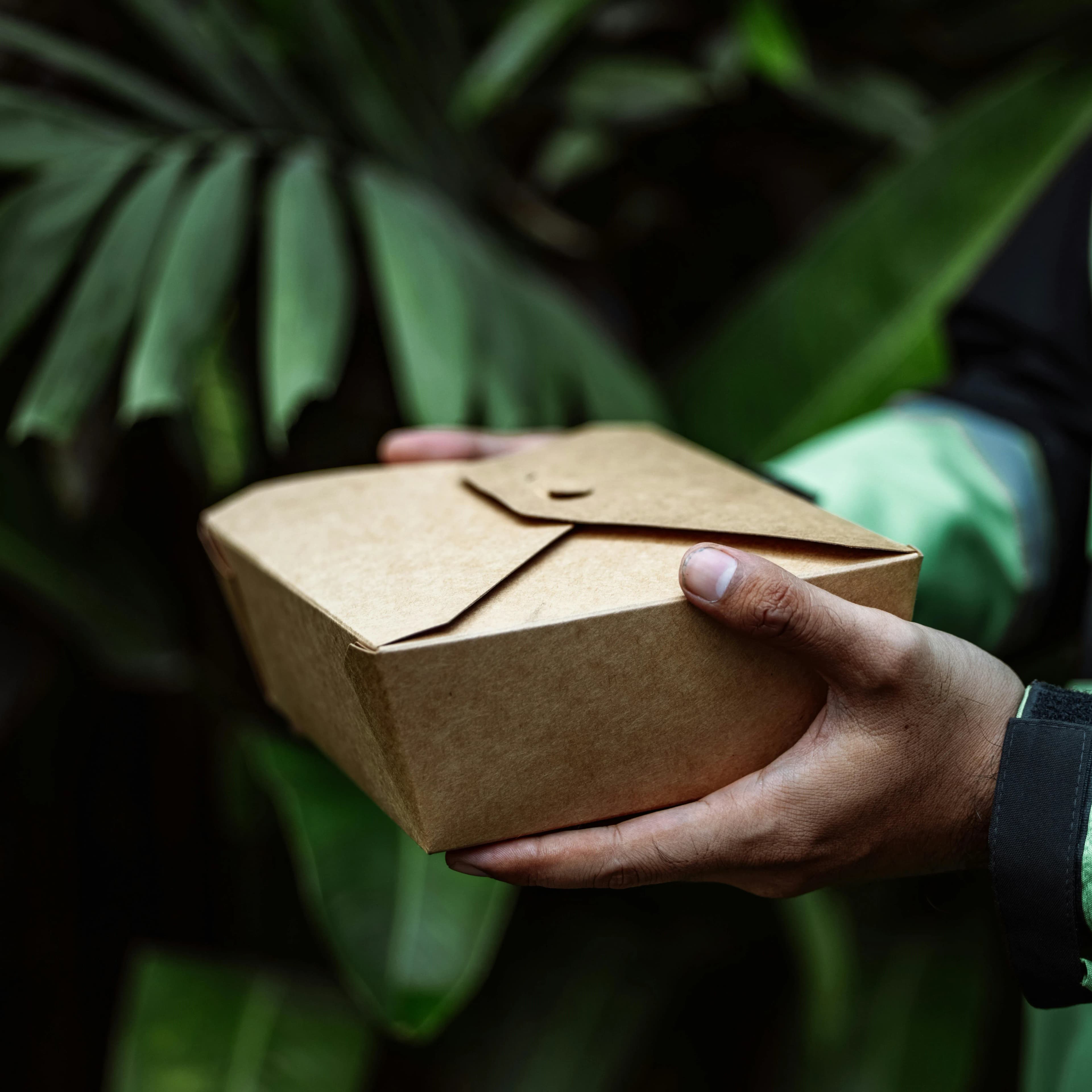
- FSC-certified kraft — natural, uncoated brown paperboard, certified to Forest Stewardship Council responsible-forestry standards. Fully recyclable and biodegradable, and the standard choice for brands leaning into a natural or handmade look.
- Recycled and recyclable paperboard (SBS/C1S) — smooth, printable board made from recycled fiber, recyclable again through standard paper recycling streams. C1S (coated one side) keeps a crisp printable face while the reverse stays uncoated.
- Corrugated e-flute — a thin, fluted board used for shipping-ready mailers, recyclable and lighter than heavier corrugated grades, which also helps reduce shipping weight and emissions.
- Rigid setup board — heavier chipboard used for premium gift and retail boxes; recyclability depends more on the wrap and finish applied to it (see below).
On top of the substrate, ink chemistry matters just as much: Nexon prints with soy-based, food-safe inks rather than conventional petroleum-based inks, which lowers VOCs and keeps recycled fiber cleaner through the recycling stream.
The Finish Can Undo the Material
A genuinely recyclable substrate can still end up in a landfill if the finish works against it. Heavy plastic lamination and certain metallic foils can make an otherwise-recyclable box harder to process — this is exactly why "eco-friendly" printed on a heavily laminated box is often a weaker claim than it looks. If a clean end-of-life story matters to your brand, that's a conversation to have with your packaging supplier before finalizing the finish, not after the box is printed.
Eco-Friendly Packaging by Product Type
Candle Boxes
For candle brands, the more defensible sustainability claim right now is mono-material construction — avoiding mixed plastic-and-paper laminates that are hard to recycle — rather than a bare "eco-friendly" label, especially as extended producer responsibility (EPR) packaging laws expand state by state and put more scrutiny on vague claims.
Soap Boxes
Soap packaging benefits from FSC-certified kraft paired with soy-based inks — a combination that holds up under both curbside recycling and biodegradability, and signals "natural" before a customer reads a word of copy.
CBD and Cosmetic Boxes
These categories often need compliance space (dosage, ingredient declarations, warnings) alongside sustainability messaging — recyclable coated stock (SBS/C1S) is usually the right balance, since it holds detailed compliance text and full-color printing while staying recyclable.
Why This Matters More Than a Marketing Checkbox
Beyond the 71% sustainability-driven purchase figure above, packaging design itself has a well-documented effect on purchase decisions generally: an Ipsos poll commissioned by the Paper and Packaging Board (April 2018, 2,002 US adults) found that 72% of American consumers say a product's packaging design influences their purchase decision. Sustainability claims that don't hold up to a second look — a "recyclable" box that's actually laminated in a way that blocks recycling, for example — risk damaging exactly the trust that made the claim worth making.
Choosing Real Sustainability Over a Vague Label
The most reliable way to evaluate any "eco-friendly" packaging claim — yours or a competitor's — is to ask which specific material, which specific certification, and which specific end-of-life outcome (recyclable, biodegradable, or compostable) is actually being claimed. If a supplier can't answer that plainly, the claim is decoration, not substance.
Frequently Asked Questions
What actually makes packaging eco-friendly?
A specific, checkable material and certification — FSC-certified kraft, recycled paperboard, soy-based inks — combined with a clear end-of-life outcome (recyclable, biodegradable, or compostable), rather than the word "eco-friendly" alone.
Is kraft packaging actually recyclable?
Yes — FSC-certified kraft is both recyclable through standard paper streams and biodegradable, as long as it isn't heavily laminated with materials that interfere with recycling.
Does a laminated or foil-finished box stop being recyclable?
It can reduce recyclability — heavy plastic lamination and some metallic foils are harder for standard recycling streams to process, even when the base board is recyclable on its own.
What's the difference between biodegradable and compostable packaging?
Biodegradable means a material breaks down naturally over time, with no guarantee on speed or conditions. Compostable is a stricter, testable claim that the material breaks down into non-toxic material specifically under composting conditions.
Does Nexon Packaging offer eco-friendly custom boxes?
Yes — FSC-certified kraft, recycled/recyclable paperboard, and soy-based inks are standard material options across our eco-friendly soap boxes and other product lines, manufactured at our St. Petersburg, FL facility.
Ready to build packaging around a real material choice instead of a marketing label? Explore custom candle boxes in FSC-certified kraft, or request a free quote for any product line.